Wednesday, July 2, 2014

What Do We Want To See in 2024? Imagining the Future Together

[Please subscribe to the Windy Hill Blog by entering your email in the space above]


  What will happen to our wonderful herds of alpacas in the next 10 years?  Imagine with me for a moment what the alpaca industry might look like in 2024….

If we ask the man on the street in 2024 “What is an alpaca?”, we might get a variety of answers.

“Alpacas?  Weren’t they like ostrichs?  People used to pay ridiculous prices for them but the bubble burst.  Now you don’t hear about them much anymore.”

“Alpacas?  Yeah, they tried to make them into livestock.  You know—sell the fleece to make money. But the recession of 2008 came before they got their act together.  Some people tried to create a meat market, but it never caught on.  I know people who still have a few in their back yards, but there isn’t much use for them.  I haven’t seen one of those TV commercials in years!”

“Alpacas?  Oh, they are so adorable, and their fleece is to die for!  My whole winter wardrobe is alpaca, and it’s all made in the US.  Cashmere and merino used to be the go-to natural fibers for cold weather, but now if it’s not at least 50% alpaca, I won’t buy it.  It’s the only thing I can comfortably wear that lasts.  I even have alpaca upholstery on my couch now—it’s beautiful and hardly shows wear, even after five years and three kids!”

Which scenario would you rather see?


I “see” a real future for the alpaca industry.   And what do I want it to look like in the future?  
Here are some of my answers.  I would like to hear yours.  It’s time to cast a new Vision…

I want…
  • ‘alpaca’ to be a household word.
  • more young families to catch the vision and join the alpaca movement.
  • US grown and manufactured alpaca products to be common in upper end department stores.
  • the value of an alpaca to be based on science and objective data, not just show ribbons.
  • U.S. alpaca socks and long underwear to be the go-to choice for cold weather wear in sporting goods stores.
  • alpacas to become a regular part of 4H and FFA.
  • U.S. alpaca rugs, draperies and upholstery to be common in U.S. homes.
  • sports fans to take alpaca stadium pads and lap blankets with them to outdoor games.
  • U.S. grown and spun yarn in every privately own yarn shop.
  • to drive across the U.S. and see large herds of alpacas grazing on open plains and filling valleys at the foot of the mountain ranges.
  • the number of AOA registered alpacas to climb to over 2,000,000.
  • standardized measurements for histograms and skin biopsies.
  • sorting and grading become 2nd nature to breeders and growers—a standard skill in the pocket of every alpaca owner.
  • us turning down offers from foreign entities to buy our fleece because we have a use for every scrap of fiber produced in the U.S.


What do you want to see happen in our Alpaca Industry?


Cindy Harris~ Alpacas at Windy Hill~ www.alpacalink.com~ (805) 907-5162~ info@alpacalink.com

Thursday, June 12, 2014

What We Need...

What We Need for the Long Haul


     The alpaca industry has undergone a shake-down during the recession just like all industries in the U.S.  Prices have gone down, just like the housing market.  Some breeders have trimmed their herds down to the very best.  Some have taken this opportunity to retire.  Most of us have had a long dry spell in alpaca sales.  What used to pass for moderate quality alpacas are now relegated to the “rug yarn” herd…or even the meat market.

     There has been an increase in the pet/fiber market for alpacas that needed to move to someone else’s feed bill.  Many people now own alpacas who could not afford them during the period when prices were high.  These are all positive things.

     The quality of alpacas in the show ring has progressed by leaps and bounds every year, and yet many alpacas who have the desirable fleece characteristics needed for a fleece market are selling as pets for the simple reason that their owners can no longer support them.  Many breeders stopped breeding altogether, some for several years, because they were out of room, or out of funds to feed additional mouths.

     We still need to increase our numbers by quite a bit to have the amount of fleece necessary to interest commercial fleece buyers.  And we need to continue our good breeding practices that have led to the level of quality we are seeing today.  WE CAN DO THIS!


     This leads me to ask, “What do we need?”  Our national organizations, AOBA and ARI have combined into AOA in an attempt to better serve the industry.  Perhaps it is time for the mindset of us as breeders to push the reset button on their goals and objectives, study where we have been and where we need to be, and re-write those goals to better serve the future of alpaca in the U.S.

Here are my thoughts about the alpaca industry as we go forward.

                       ---------------------------------------------------------


We need....

People with vision who
  • are passionate about a commercial alpaca fleece industry
  • will set standards that advance the overall quality of the national herd
  • want to usher in the U.S. alpaca fiber industry
  • will coordinate the collection and sale of fleece at a fair price
  • will run AOA with drive and determination to make the U.S. Alpaca         Industry succeed at home and abroad

Serious livestock-model alpaca breeders who 
  • are in it for the long haul
  • breed herds of quality alpacas to create a viable U.S. fleece industry
  • have the financial standing to get through lean times
  • have enough pasture land to support alpacas in an economical manner
Objective methods for evaluating breeding stock and fleece so that
  • reliable choices can be made when planning breedings
  • the quality of the national herd continually improves
  • breeders have reliable means of achieving realistic breeding goals

Businesses that create commercial uses for alpaca fleece to
  • create finished products from U.S. alpaca fleece
  • create U.S. jobs with U.S. fleece
  • accommodate different grades of fleece
  • present the best possible use of each grade to the market
  • diversify the fleece market in the U.S.

A community of support businesses that will provide
  • sorting and grading services
  • shearing services
  • competent veterinary care
  • feed specifically aimed at healthy fleeces
  • equipment for alpaca handling and fleece processing
  • transportation and warehousing

An alternative end-use community of individuals, businesses and charities that
  • use alpaca fleece in craft and art endeavors
  • absorb culls from breeding herds
  • as pets
  • as meat and hides
  • as therapy animals
  • as ambassadors to the public


             ----------------------------------------------------------------------------

     I am sharing these ideas with you knowing that this is not the complete picture. I'm sure I’ve left things out, and what I have included probably needs tweaking.  I invite you, my readers, to add things you think would benefit the alpaca industry as we march onward toward the goal of the commercial U.S. fiber market.  Will you join me?  I would love to hear from you!

Sign up for our Email Announcement List: http://sales.alpacalink.com/contact.aspx

--------------------------------------------------------------------------------------------------


Alpacas at Windy Hill ~ www.alpacalink.com ~ info@alpacalink.com
7660 Bradley Rd. Somis, CA ~ (805) 907-5162

Thursday, May 22, 2014

Alpaca Blogging at Windy Hill: Bringing Alpacas into the Fold of Small Sustainabl...

Alpaca Blogging at Windy Hill: Bringing Alpacas into the Fold of Small Sustainabl...: Small Farms are the wave of the present and the future.  You have probably noticed that you can’t get very far off the main highwa...

Bringing Alpacas into the Fold of Small Sustainable Farms


Small Farms are the wave of the present and the future.  You have probably noticed that you can’t get very far off the main highway in any rural area before you see signs for small, sustainable organic farms.  There is a wave of people who are headed back to the farm for various reasons—
  • to escape the Rat Race
  • to do something tangible and real
  • to get out of the traffic and the lights of the city
  • to give their children a healthier place to grow up
  • to get back to their roots
  • because their Inner Rancher has finally broken free…


They raise specialty produce to sell locally to restaurants and farmer’s markets.  They till their own soil, plant their own seeds, live on the land, and are content with making a comfortable living.  They realize that in farming, they already “have it all”.


Aside from orchards and vegetables, small farmers often have livestock of one kind or another, and I would like to make the argument that the Alpaca is the ideal livestock for the small, sustainable farm.  
  • Alpacas are about as Green as an animal can be!  They
  • don’t churn up the turf or the sod with their padded feet
  • nibble grass rather than pulling it up by the roots
  • are neat and clean about where they deposit their manure
  • don’t require slaughter to produce a viable product
  • make very efficient use of their food, leaving manure that is low in nitrogen and greenhouse gases
  • create extremely rich and “cool” fertilizer
  • produce a luxury fleece that does not require harsh chemicals and hot water to process
  • are gentle and easy to handle.


Rotating crops with fallow fields and alpaca pasture would help the soil maintain its richness, making everything work well together.  

(Thanks to http://s3.freefoto.com/images/07/09/07_09_4_prev.jpg)

If one were to design a small farm from scratch, it could include 
  • produce to sell locally  
  • chickens to provide eggs, pest control, fertilizer and meat 
  • composting to recycle by-products into fertilizer
  • alpacas to fertilize the land and produce fleece
  • tree fruit
  • farm-made food products such as jam or apple butter 
  • home-made products using alpaca fleece and other natural fibers.


Here are some resources that might inspire you, give you ideas and connect you with your Inner Farmer/Rancher.  

Alpagriculture...Sustainable life!—https://www.facebook.com/groups/562769040424738/
California Small Farm Conference-- http://www.californiafarmconference.com

Give it some thought.  It might just be what you have been trying to do all your life.  It took me 50 years, but I got here, and I’ve never been happier!

Join our mailing list and come out to Alpacas at Windy Hill to find out more.

---------------------------------------------

Alpacas at Windy Hill ~ Cindy Harris & Doug Fieg ~ www.alpacalink.com ~  info@alpacalink.com
7660 Bradley Rd. Somis, CA 93066  ~ (805) 907-5162

Tuesday, May 6, 2014

Are You Ready For A FIBER RETREAT This Summer???

To my Fiber-Minded Friends, near and far--


We are putting together a 


Spinning/Knitting/Crocheting/Relaxing/Weaving/ Playing Retreat 


this summer in Temecula at the Viña de Lestonnac Retreat Center, 39300 De Portola Road, Temecula, CA 92591. 


DETAILS:


-Date:
25-27 July (anytime from 1pm on 25th until around 2pm on 27th)


-Cost: $240 pp


-Includes: 
Double room with 2 single beds (or $100 extra for a private room); 
One meal Friday, 3 Saturday, Brunch on Sunday; 
Free coffee, tea, water 24/hrs/day; 
Plenty of room to spin/knit/crochet/gab/weave (stories or yarn)/rest/read......


-Deposit is $120 with final $120 due NLT June 25th. Reservations are limited, so if you'd like to join us, please let me know right away.  

Send your deposit check to

Cindy Harris
7660 Bradley Rd.
Somis, CA 93066

AGENDA:

Informal sharing of ideas, information, stories, tall tales, fiber arts techniques, songs, and fun. 
No formal classes are planned, but we imagine that many will spring up spontaneously!  

If you have something to learn or something to share, then you are just right for this event!


We have seen the grounds and they are beautiful.

Wine country --lovely scenery. 
Rooms are very clean. 
Special meals can be arranged at no extra cost. 
Catholic services held daily at 9am for those so inclined.
Sing-alongs in the Amphitheater in the evening.


You are welcome to bring any snacks or beverages (including alcohol if you wish). We might be dyeing fiber, dyeing laughing, networking, dancing, teaching, learning, singing and giggling at any time.  I'm even bringing my guitar!


Let me know right away if you'd like to join us!


Email me today if you are interested in going with us!
Questions?  Email me or call me: 805-907-5162

Friday, May 2, 2014

Knitting -- Old Practice with New Twists!

(to SUBSCRIBE to our Blog, put your email in the space above and click SUBSCRIBE)

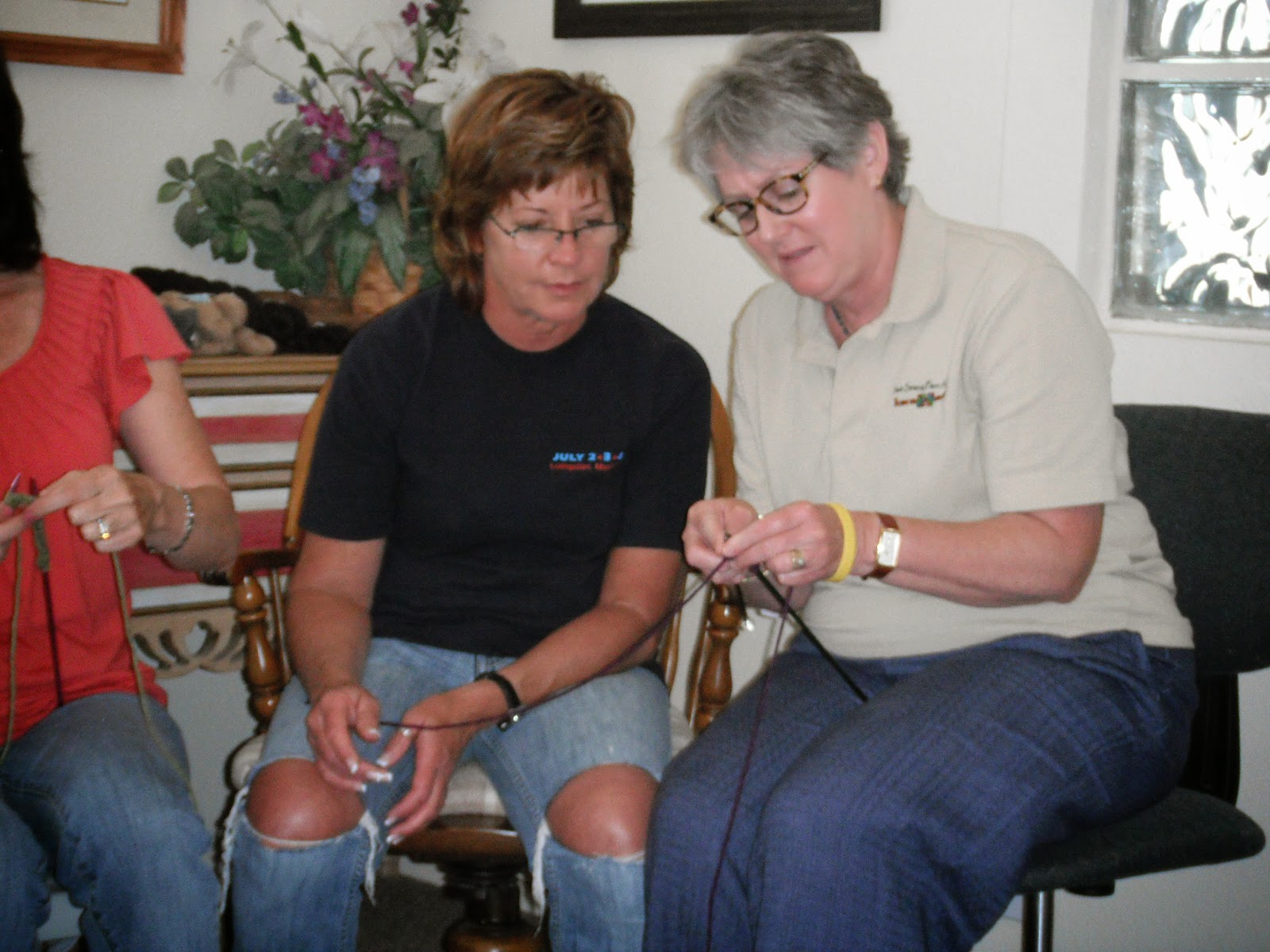
     KNITTING has experienced a revival in the last several years.  In this day of electronics, many people are choosing to get in touch with some of the more tactile and traditional skills of human history.  The Knitting Circle has become popular again.  It might, at first glance, look like a group of Millenials texting on their phones, but it’s really a group of people (men too!) getting in touch with their fuzzier, warmer side by actually talking in person while they create something useful and satisfying with knitting needles and yarn.  


     The really determined among us are also contributing to the growing and milling of natural fibers rather than acrylic, nylon and polyester by buying and using locally-grown and milled natural fibers (see the Gold Coast Fibershed).  In our case here at Windy Hill, that is ALPACA.

     Alpaca is growing in popularity as it gains notoriety due to a growing number of alpaca farms in the U.S.  Huacaya fiber is crimpy and fuzzy, similar in style to sheep’s wool.  Suri fiber is slick, shiny, and equally soft, similar to silk.


     We raise primarily suri alpaca at Alpacas at Windy Hill, although we usually have huacayas here as well.  Suri, however, being a bit different from wool and even huacaya fiber, needs some special attention to make knitting projects successful.  Once the knitter embraces the differences, suri is often preferred due to it’s superior drape.  Suri also lends itself well to lace-weight yarn and projects, and always looks elegant.

     Sue Simonton, owner of Little Gidding Farm Suri Alpacas, has written a guide for knitting with suri alpaca that I thought might interest some of you, our blog readers.  Sue is a member of the Suri Network Product Development Committee, and contributes to the Facebook page by the same title.  Read and enjoy!  

     We invite you to come out to Alpacas at Windy Hill (Like us on Facebook!and get some suri yarn to try for your next knitting (or crocheting) project!

Cindy


KNITTING WITH SURI - FACT SHEET

Why knit with suri? What can I expect?

• Fine suri yarn is a beautiful lustrous yarn,
• Like cashmere in its softness and silk in its drape and luster.
• It takes color as beautifully as silk or kid mohair.

What are the properties of suri yarn?
   • Its drape and weight make it perfect for garments that drape rather than cling.
   • Fine and open work garments are warm.
   • Not as elastic as wool but more elastic than silk, cotton or bamboo.
   • Suri blocks and holds its shape.  That is, it is resilient if it is not made of heavy yarn and not knit loosely.

What does fine mean?
   • Fibers are classed by micron. British cashmere is < 19 microns. Vicuna
   • Alpaca, including suri, includes a wide range of fineness and the fleece is classed accordingly.
      The Suri Network, along with the Australians, the Canadians, and Peruvians class fibers as follows:
          Grade #1, Suri Ultimate,
          Grade #2, Suri Superfine, 20 -22.9 μm,
          Grade #3, Suri Classic, 23-25.9μm,
          Grade # 4, 26-28.9μm.
          Grade #5, 29-31.9μm,
          Grade #6, 6 32-35μm.
      Classing provides guidelines for sorting fiber into micron, color and staple length.
      The fibers’ micron grade will determine how the yarn is used as well as its price.
   • Fine suri, Grades #1 or #2 can be worn next to the skin, a Grade #3, if it is carefully sorted with few
      fibers over 30 can make a comfortable garment— coarser fiber is best used for rugs or felting.

How do I use my fine suri yarn? How do I find patterns?
   • Suri — fine, lustrous, sound, consistent in handle and staple length is a luxury fiber.
   • This yarn is ideally suited to shawls and scarves but also lace sweaters, christening bonnets and
      dresses, and wedding veils.
   • Whether spun in a fine lace weight (250 yds/oz) or a light fingering (75 – 100 yds.oz) it should adapt
      easily to patterns for such garments. Attention to needle size is important.
   • Go down a needle size or two from a pattern created for wool. Always check gauge!
   • Patterns for silk and fine cotton should behave much the same as suri as these yarns do not have the
      elasticity of wool. Patterns for huacaya fall somewhere in between — not as elastic as wool, not as
      silky as suri or silk. So again, check the gauge.

What do I do with my stronger (coarser) yarns?
   • Heavier garments of stronger (coarser) fiber do not work well when made of pure suri.
   • Lovely drape in a finer yarn is a weighty drag unless care is taken to knit very firmly.
   • Pure suri in the heavier weights of yarn, worsted and bulky, becomes rather like string.
   • Suri can be blended with wool, preferably a wool of similar staple length and micron count and one
      with some luster. This makes the yarn lighter, more resilient, suitable for outerwear.
   • Patterns for this weight are most likely to be for wool so checking gauge and needle size is important.

What needles should I choose?
   • For knitting suri yarn smooth wooden or bamboo needles are good; for lace projects addi lace needles
      are wonderful. As suri is a slippery yarn, the addi lace needles have just enough drag to hold the yarn
      on the needle and are still fast and addi lace needles now come in a full range of sizes.
   • The size needle can very according to the project. The finer the needle the more stable the finished
      piece.

Sue Simonton, Little Gidding Farm Suri Alpacas
---------------------------------------------
Cindy Harris & Doug Fieg ~ Alpacas at Windy Hill ~ www.alpacalink.com
(805) 907-5162 ~ info@alpacalink.com ~ 7660 Bradley Rd. Somis CA 93066